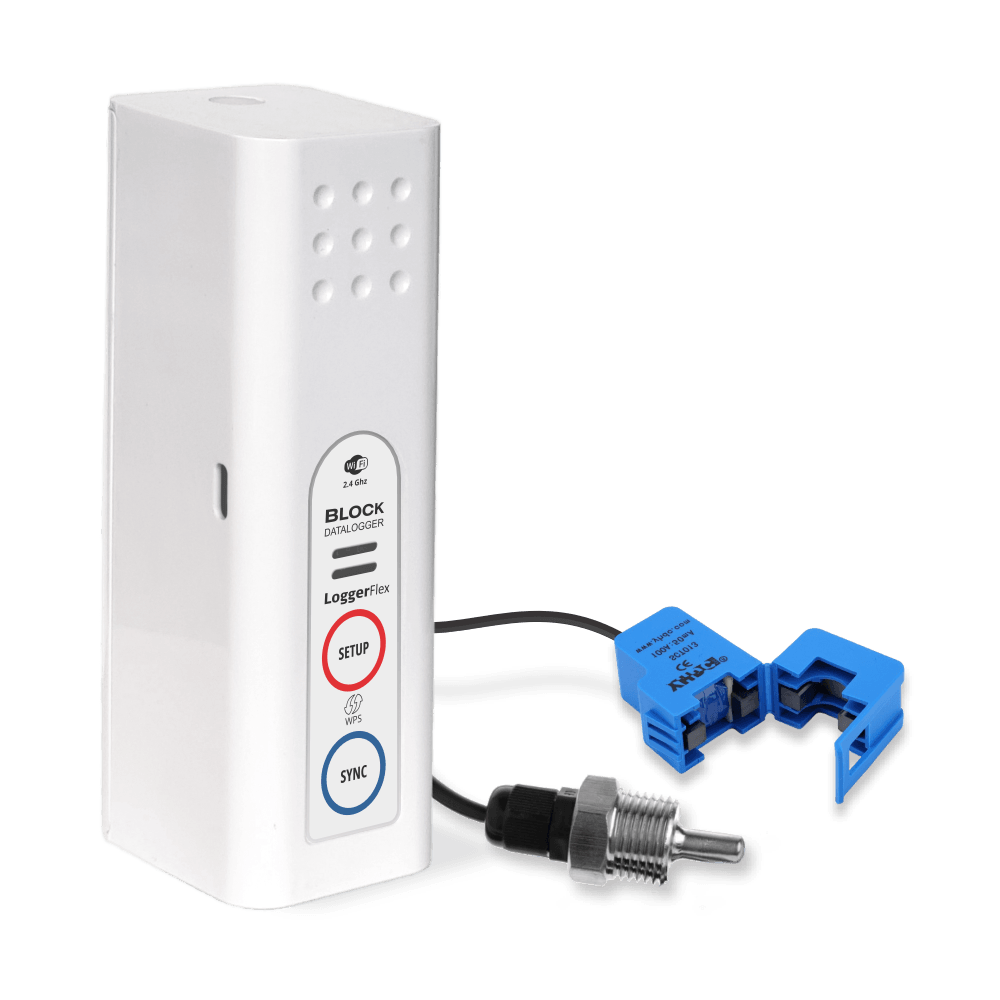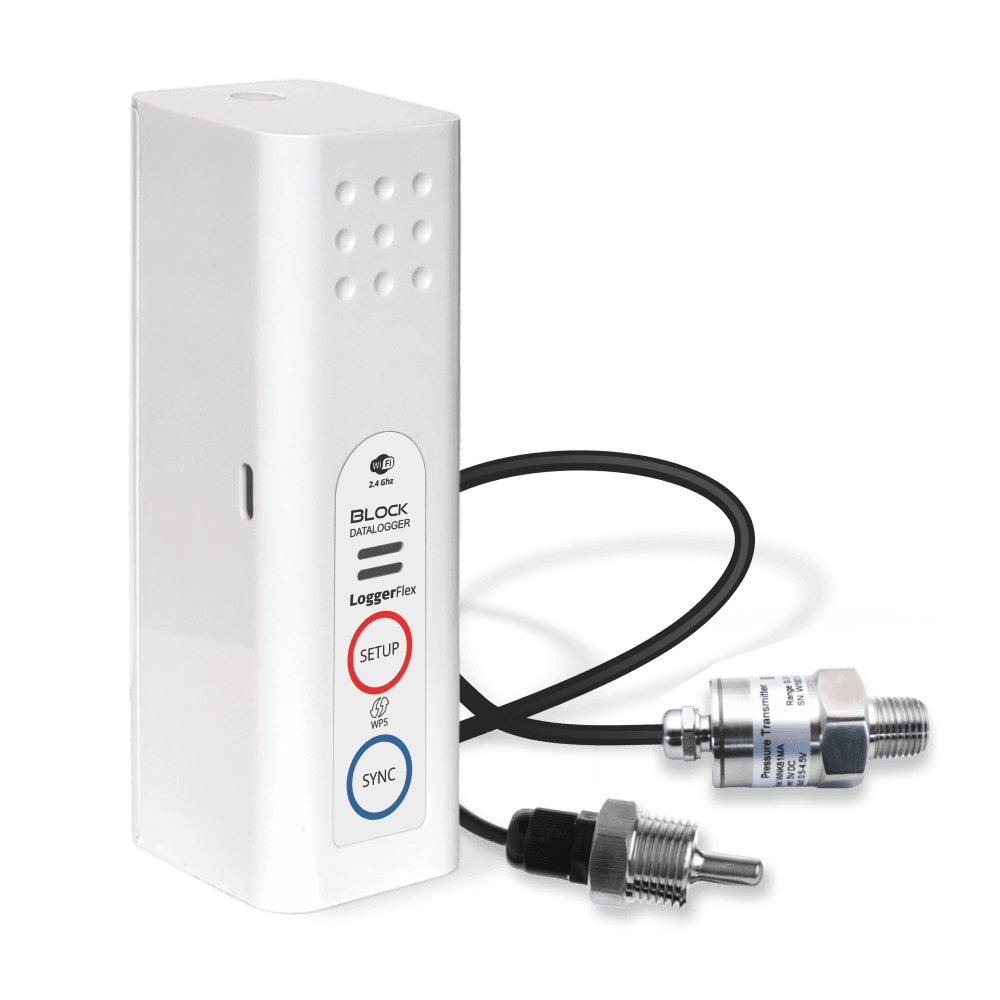
Walking into a complex mechanical room is overwhelming. Dozens of near-identical motors hum, pipes twist everywhere, and the parameters that matter most — heat, pressure, electrical current — are completely invisible. To diagnose anything, a technician walks back and forth between the machine and a laptop.
What if you could look at a physical pump and see its temperature, current and health score floating right on top of it? That's the LoggerFlex augmented-reality (AR) view — a mixed-reality visualizer that brings your digital twin into the physical world.
Augmented, not virtual
Unlike VR, which shuts out the real world, AR overlays digital information on top of it. Wearing a passthrough headset like the Meta Quest, a technician sees the actual room normally — and live data cards float directly over each piece of equipment, read at a glance.
Hands-free, tool-first work
Technicians need their hands for valves and tools, not a tablet. With AR, the data follows their gaze — look at a chiller and its live card appears in your peripheral vision, both hands free.
Zero-mistake troubleshooting
In a row of ten identical pumps, finding the one with a fault wastes time and invites errors. In AR, a glowing red warning beacon floats over the exact machine in trouble. The tech walks straight to it.
X-ray vision for live adjustments
Electrical load, heat and pressure are invisible forces. As a technician turns a valve or adjusts a dial, they watch the floating numbers update, instantly seeing how a physical change affects the system.
Mapping your space
There are two ways to build your 3D zone. Scan it with the headset: pair the Quest with a 6-digit code, look around to let the depth sensors map the room, then drop virtual pins where your sensors are mounted. Or upload a model: drag-and-drop a standard .glb file into your desktop dashboard. An origin QR code stuck to the door frame lets the headset snap the virtual cards perfectly onto their real-world counterparts.
The augmented-reality view turns the data your loggers already collect into a spatial, hands-free tool that saves time and prevents costly mistakes — an extension of the same LoggerFlex digital twin that maps your facility in the cloud.